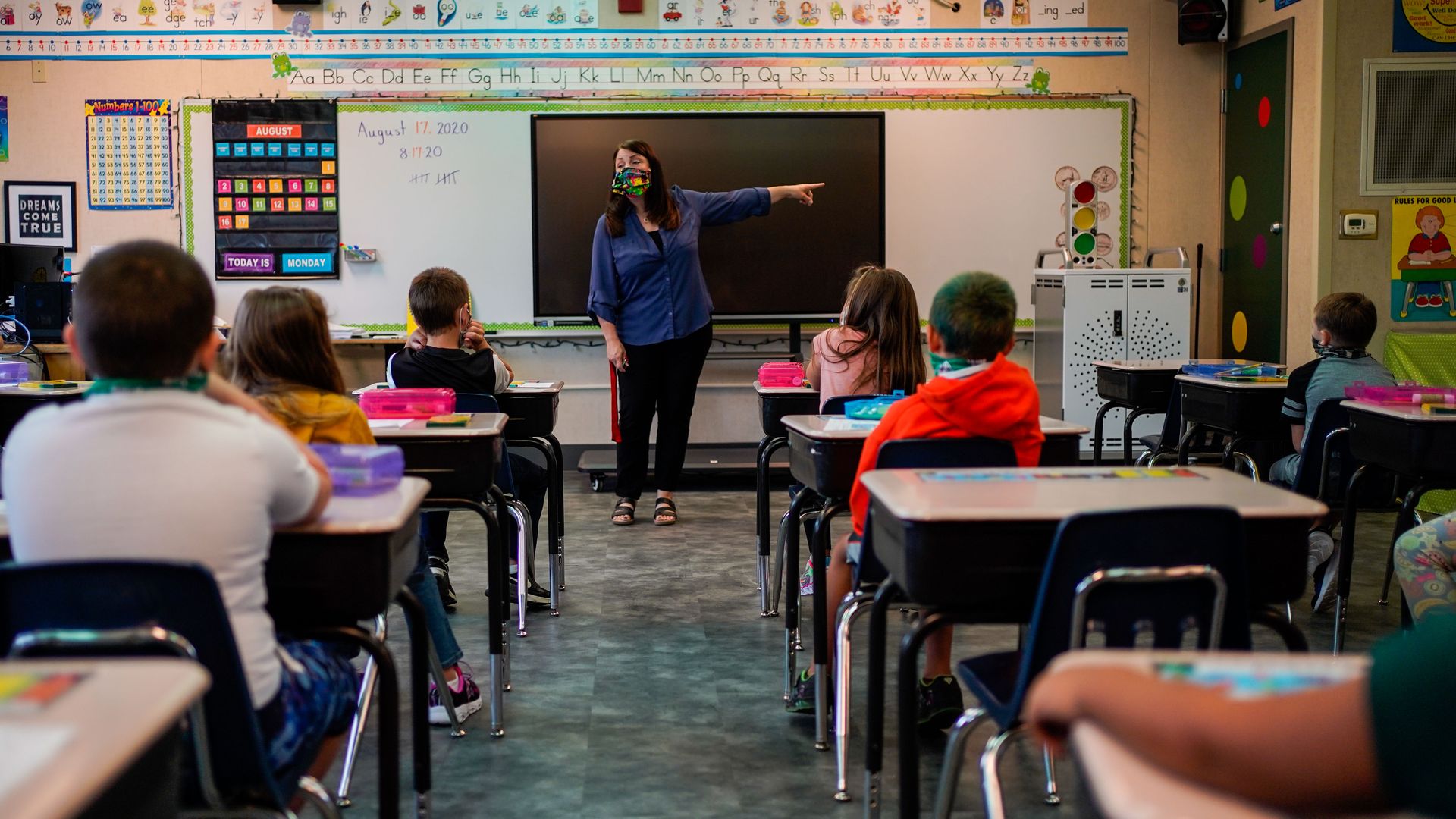
A second-grade class at Weaverville Elementary School on Aug. 17, 2020, the first day of returning to in-person instruction, in Weaverville, Calif. Photo: Kent Nishimura/Los Angeles Times via Getty Images
Children are falling severely behind in reading as the world enters its third year of the coronavirus pandemic, according to multiple studies.
The big picture: Though U.S. literacy rates were already dipping prior to COVID-19, studies show that roughly a third of kindergarten through second-grade students are missing reading benchmarks compared to about 21% in 2019.
Why it matters: The learning loss disproportionately impacts children who are Black, Hispanic, disabled, low-income or not fluent in English.
Details: As schools closed and districts struggled to adapt to remote teaching, students were forced to learn the basics of reading outside the classroom with varying access to online instruction.
One study found that K-2 students are scoring below the benchmark at the highest rate ever observed in a Virginia learning assessment’s 20-year history.
“In these three early grades, persistent learning losses have widened the national gaps in early reading skills between Black and Hispanic students and their white counterparts,” an0ther study noted.
Perhaps the most critical factor at play is the shortage of teachers that has persisted even as students returned to classrooms.
Nearly half of public schools report full- or part-time teaching vacancies, according to data released last week by the National Center for Education Statistics. Special education and elementary school positions have seen the most vacancies.
Below benchmark rates are still largely moving in the wrong direction and a higher proportion of students than ever before are at medium to high risk for reading difficulties.
What they’re saying: “The scope of the issue is large in scale and deserves districtwide, statewide, and national attention,” one research brief noted.
“Effective instruction and intervention are critical because reading difficulties typically persist for students who do not develop adequate reading skills within the first three years of schooling,” the authors of the Virginia study wrote.
“In turn, reading deficits often compound to negatively affect other areas of academic learning, engagement, and success. Thus, without adequate, sustained, and targeted supports, it is likely that many of these students will not only continue to struggle with reading, but in other domains as well.
There is no heartbreak quite like watching your five-year-old realize they are “behind.” This post explores the emotional toll of the slow reading group and why early parental intervention is the only way to swap the dread of catch-up for the joy of confidence. The Day the “Groups”
The Hidden Gap Between Grades and Reading Mastery For parents of kindergarten and first-grade students, a “Satisfactory” or “B” in reading can offer a false sense of security. While report cards measure general classroom participation and broad benchmarks, they often overlook the foundational literacy pillars required for long-term success. To
Why Effort is Overrated and Trusting the System is the Ultimate Self-Care Congratulations! You’ve successfully outsourced your child’s nutrition to the cafeteria, their social life to the playground, and their physical fitness to a twenty-minute recess. Now, it’s time for the final boss of parenting hacks: outsourcing the ability to
With national reading proficiency at a critical crossroads, the role of the parent is more vital than ever. This guide provides parents of kindergarten beginning readers with actionable strategies to monitor benchmarks, foster phonemic awareness, and ensure students are reading to learn by the third grade. The National Literacy Crisis:
There is no heartbreak quite like watching your five-year-old realize they are “behind.” This post explores the emotional toll of the slow reading group and why early parental intervention is the only way to swap the dread of catch-up for the joy of confidence. The Day the “Groups” Were Assigned
The Power of Parental Involvement Parents it’s time to have a serious conversation about the education of our youngest readers – those bright-eyed Kindergarteners and Enthusiastic First Graders. My message today isn’t just important; it’s